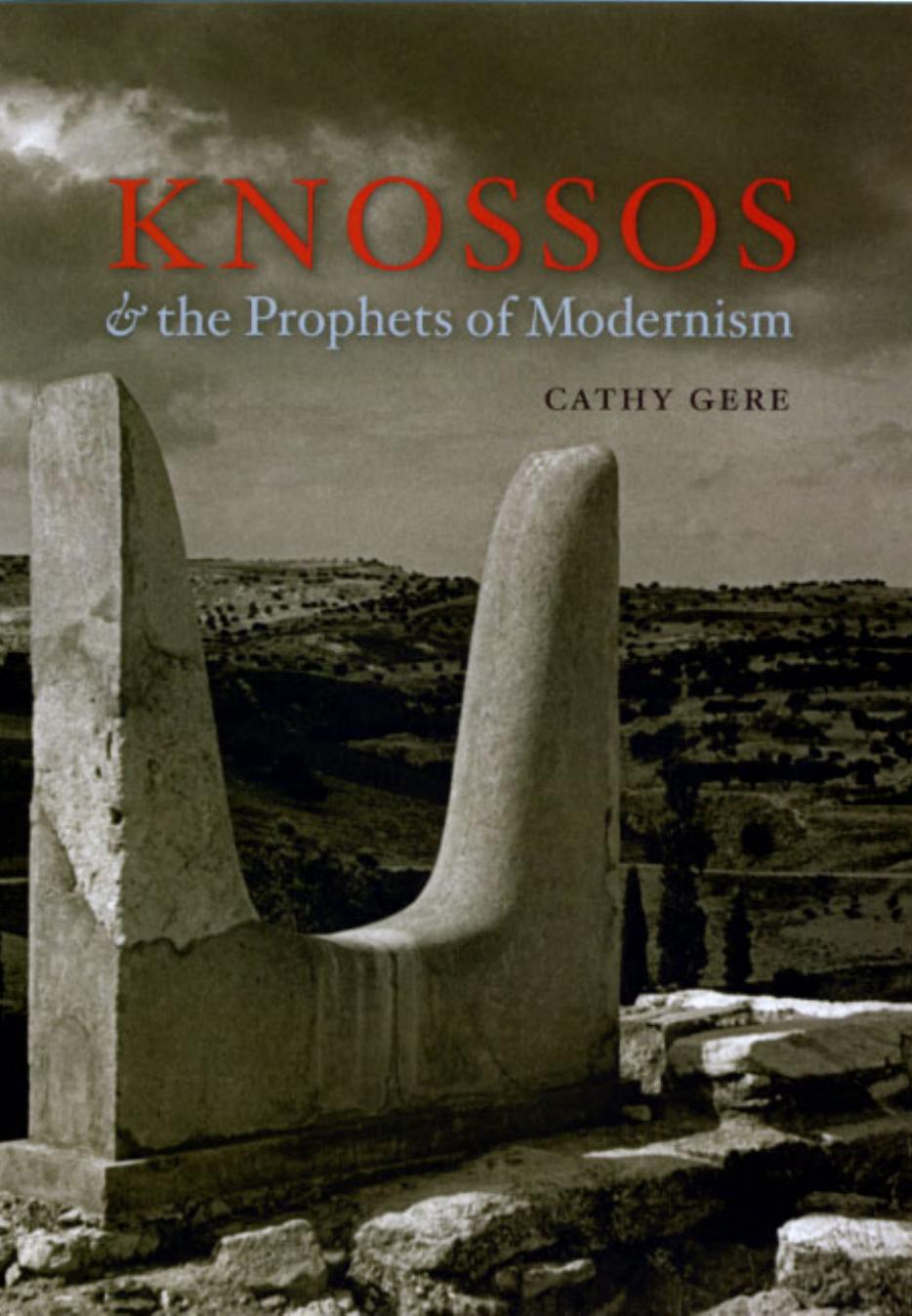
Knossos and the Prophets of Modernism by Cathy Gere
Author:Cathy Gere
Language: eng
Format: epub, pdf
Publisher: University of Chicago Press
Mulligan is the true heir to Nietzsche, the dangerously charming medical student whose dissecting room experiences are all too compatible with moral nihilism. Poised to dive into the bay, he cries out “I am the Übermensch.”8 And like Nietzsche, he recognizes in the pagan polytheism of his beloved Greeks a religion compatible with his radical atheism: “God, Kinch, [Gogarty’s real nickname for Joyce, the sound of a knifeblade cutting] if you and I could only work together we might do something for the island. Hellenise it.”9
In counterpoint to Mulligan’s amoral cheerfulness, the whole opening scene is rendered through the veil of Dedalus’s obsessive relationship with his mother’s memory. Even the view of the bay from the tower—“a grey, sweet mother,” in Mulligan’s Swinburnian formulation—evokes the horror of her last days: “The ring of bay and skyline held a dull green mass of liquid. A bowl of white china had stood beside her deathbed holding the green sluggish bile which she had torn up from her rotting liver.”10 Dedalus catalogs the objects that she left behind: “Her secrets: old feather fans, tasselled dancecards, powdered with musk, a gaud of amber beads in her locked drawer.”11 She appears to him in a nightmare whose olfactory vividness continues to disturb his waking hours: “In a dream, silently, she had come to him, her wasted body within its loose graveclothes giving off an odour of wax and rosewood, her breath bent over him with mute secret words, a faint odour of wetted ashes.”12
An English anthropologist is staying with Mulligan and Dedalus in the Martello tower, and over breakfast the two men mock his earnest search for Gaelic authenticity, presenting the old woman who brings the milk as a figure from the annals of Irish mythology. But despite their banter, Stephen’s thoughts drift as he contemplates the old woman pouring the milk into their jug, fashioning her as an ancient archetype: “Old and secret she had entered from a morning world, maybe a messenger. She praised the goodness of the milk, pouring it out. Crouching by a patient cow at daybreak in the lush field, a witch on her toadstool, her wrinkled fingers quick at the squirting dugs.”13
Everywhere, the figure of the mother haunts Dedalus. The second chapter takes place in the school where he teaches classics to a class of inky schoolboys. One pupil approaches him afterwards for help with his mathematics homework, and Dedalus surveys him with a combination of disdain and reluctant kindness: “His tangled hair and scraggy neck gave witness of unreadiness and through his misty glasses weak eyes looked up pleading.” After helping him with his sums he considers the boy again:
Download
Knossos and the Prophets of Modernism by Cathy Gere.pdf
This site does not store any files on its server. We only index and link to content provided by other sites. Please contact the content providers to delete copyright contents if any and email us, we'll remove relevant links or contents immediately.
| Anthropology | Archaeology |
| Philosophy | Politics & Government |
| Social Sciences | Sociology |
| Women's Studies |
The remains of the day by Kazuo Ishiguro(9004)
Tools of Titans by Timothy Ferriss(8403)
Giovanni's Room by James Baldwin(7352)
The Black Swan by Nassim Nicholas Taleb(7137)
Inner Engineering: A Yogi's Guide to Joy by Sadhguru(6799)
The Way of Zen by Alan W. Watts(6621)
The Power of Now: A Guide to Spiritual Enlightenment by Eckhart Tolle(5790)
Asking the Right Questions: A Guide to Critical Thinking by M. Neil Browne & Stuart M. Keeley(5779)
The Six Wives Of Henry VIII (WOMEN IN HISTORY) by Fraser Antonia(5519)
Astrophysics for People in a Hurry by Neil DeGrasse Tyson(5196)
Housekeeping by Marilynne Robinson(4455)
12 Rules for Life by Jordan B. Peterson(4312)
Double Down (Diary of a Wimpy Kid Book 11) by Jeff Kinney(4278)
Ikigai by Héctor García & Francesc Miralles(4278)
The Ethical Slut by Janet W. Hardy(4262)
Skin in the Game by Nassim Nicholas Taleb(4257)
The Art of Happiness by The Dalai Lama(4133)
Skin in the Game: Hidden Asymmetries in Daily Life by Nassim Nicholas Taleb(4012)
Walking by Henry David Thoreau(3968)
